


About NET-LC 2027
Advanced modern energy technologies are essential to economic development everywhere in the world. Sustained economic progress depends on secure, reliable, and affordable energy technologies. The previous pattern of global energy development-especially its reliance on fossil fuels-brings substantial harm along with its benefits. Therefore, it is particularly important to develop new energy technologies. Technological breakthroughs will reduce the dependence on oil and launch an era of cleaner, more efficient, and more secure kinds of power for the global economy.
New technologies will open up strategic opportunities for those agile and innovative enough to embrace them. The 2027 6th International Symposium on New Energy Technology Innovation and Low Carbon Development (NET-LC 2027) will be held in Kunming, China from May 14-16, 2027. The conference mainly focuses on the latest research areas of "new energy technology innovation and low carbon development", aiming to provide an international cooperation and exchange platform for experts and scholars of new energy technology innovation and low carbon development, and enterprises to share research results, to discuss problems and challenges, and to explore cutting-edge technologies. Submissions and participation from scholars, either from home or abroad, are welcome.
Important Dates
Full Paper
Submission Date
March
15
2027
Notification
Date
April
14
2027
Registration
Deadline
April
29
2027
Conference
Dates
May
14-16
2027

Countdown to the Conference:
Conference Topics
The topics of interest for submission include, but are not limited to:
📚︎Track 1: Integration of Smart Grid and New Energy
Renewable Energy (PV/Wind) Friendly Access Technology for Smart Grids; Computational Intelligence-Driven Dynamic Optimal Scheduling of Smart Grids; Cooperative Control Strategy for Microgrids and Main Grids; Renewable Energy Power Prediction and Fluctuation Suppression in Smart Grids; Intelligent Control and Energy Management of DC Microgrids; Cluster Control of Distributed Generation in Smart Grids; Stability Analysis of Smart Grids with High Renewable Energy Penetration; Application of Computational Intelligence in Grid Fault Diagnosis and Restoration; Flexible Load Interactive Response Technology for Smart Grids; Cross-Regional Renewable Energy Complementary Scheduling in Smart Grids;
📚︎Track 2: Low-Carbon Energy System Planning and Operation
Life-Cycle Planning Method for Low-Carbon Energy Systems; Computational Intelligence-Optimized Low-Carbon Operation Strategy of Energy Systems; Collaborative Planning of Renewable Energy Bases and Load Centers; Low-Carbon-Oriented Capacity Configuration of Integrated Energy Systems; Carbon Flow Tracking and Low-Carbon Optimization of Energy Systems; Robust Operation of Low-Carbon Energy Systems Under Uncertainty; Urban-Rural Integrated Low-Carbon Energy Network Planning; Application of Computational Intelligence in Carbon Emission Prediction of Energy Systems; Grid Operation Optimization Oriented to Renewable Energy Accommodation; Multi-Objective Optimization Design of Low-Carbon Energy Systems;
📚︎Track 3: Computational Intelligence and Energy System Control
Machine Learning-Driven Adaptive Control of Energy Systems; Application of Reinforcement Learning in Microgrid Energy Management; Fuzzy Logic Control-Optimized Renewable Energy Generation Systems; Application of Neural Networks in Power Electronic Device Control; Computational Intelligence-Driven Charging and Discharging Control of Energy Storage Systems; Multi-Agent Collaborative Distributed Control of Energy Systems; Application of Deep Learning in Energy System Condition Monitoring; Energy System Control Parameter Tuning Optimized by Evolutionary Algorithms; Application of Computational Intelligence in Robust Control of Energy Systems; Intelligent Fault-Tolerant Control Technology for Renewable Energy Generation Systems;
📚︎Track 4: Energy Storage Technology and Low-Carbon Synergy
Low-Carbon Scheduling Technology for Synergy Between Energy Storage and Renewable Energy; Computational Intelligence-Optimized Configuration and O&M of Energy Storage Systems; Application of Long-Duration Energy Storage Technology in Renewable Energy Accommodation; Intelligent Control Strategy for Energy Storage Participating in Grid Frequency and Peak Regulation; Collaborative Optimal Operation of Distributed Energy Storage and Distribution Networks;
📚︎Track 5: Energy Trading and Market Mechanisms
Trading Modes and Mechanism Design of Smart Energy Markets; Blockchain-Enabled Peer-to-Peer Trading Technology for Renewable Energy; Application of Computational Intelligence in Energy Market Price Prediction; Smart Energy Trading Optimization with Demand Response Participation; Cross-Regional Renewable Energy Trading Collaborative Mechanism;
📚︎Track 6: Integration of Smart Cities and Intelligent Energy
Construction of Integrated Energy Service Platform for Smart Cities; Renewable Energy Integration and Intelligent Management of Urban Building Complexes; Smart City Transportation-Energy Collaborative Optimization; Computational Intelligence-Driven Energy Demand Prediction for Smart Cities; Shared Economy Model of Distributed Energy in Smart Cities;
📚︎Track 7: Innovation in Sustainable Energy Technology
Innovation and Application of High-Efficiency PV/Wind Power Generation Technology; Application Technology of Hydrogen in Low-Carbon Energy Systems; High-Efficiency Conversion and Utilization Technology of Biomass Energy; Optimization of Marine Energy (Tidal/Wave) Power Generation Systems; Energy Efficiency Improvement Technology of Renewable Energy Generation Systems;
📚︎Track 8: Energy System Management and Standard
Digital Management Platform for Smart Energy Systems; Intelligent O&M Technology for Low-Carbon Energy Systems; Construction and Application of Standard System for Smart Energy Systems; Information Security Protection Technology for Energy Systems; Evaluation and Certification Standards for Low-Carbon Energy Projects;
Publication
All accepted full papers will be published in the conference proceedings and will be submitted to EI Compendex / Scopus for indexing.
NET-LC 2026 | ||
📚︎Cover |
📚︎EI Compendex |
📚︎Scopus |


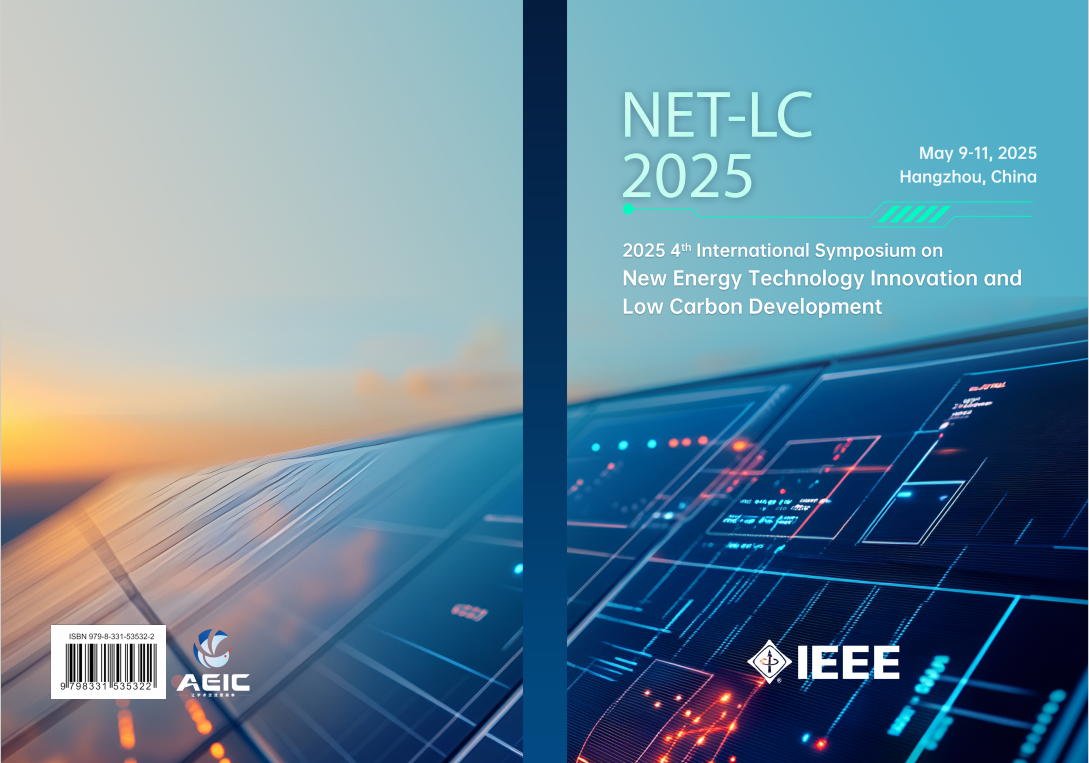
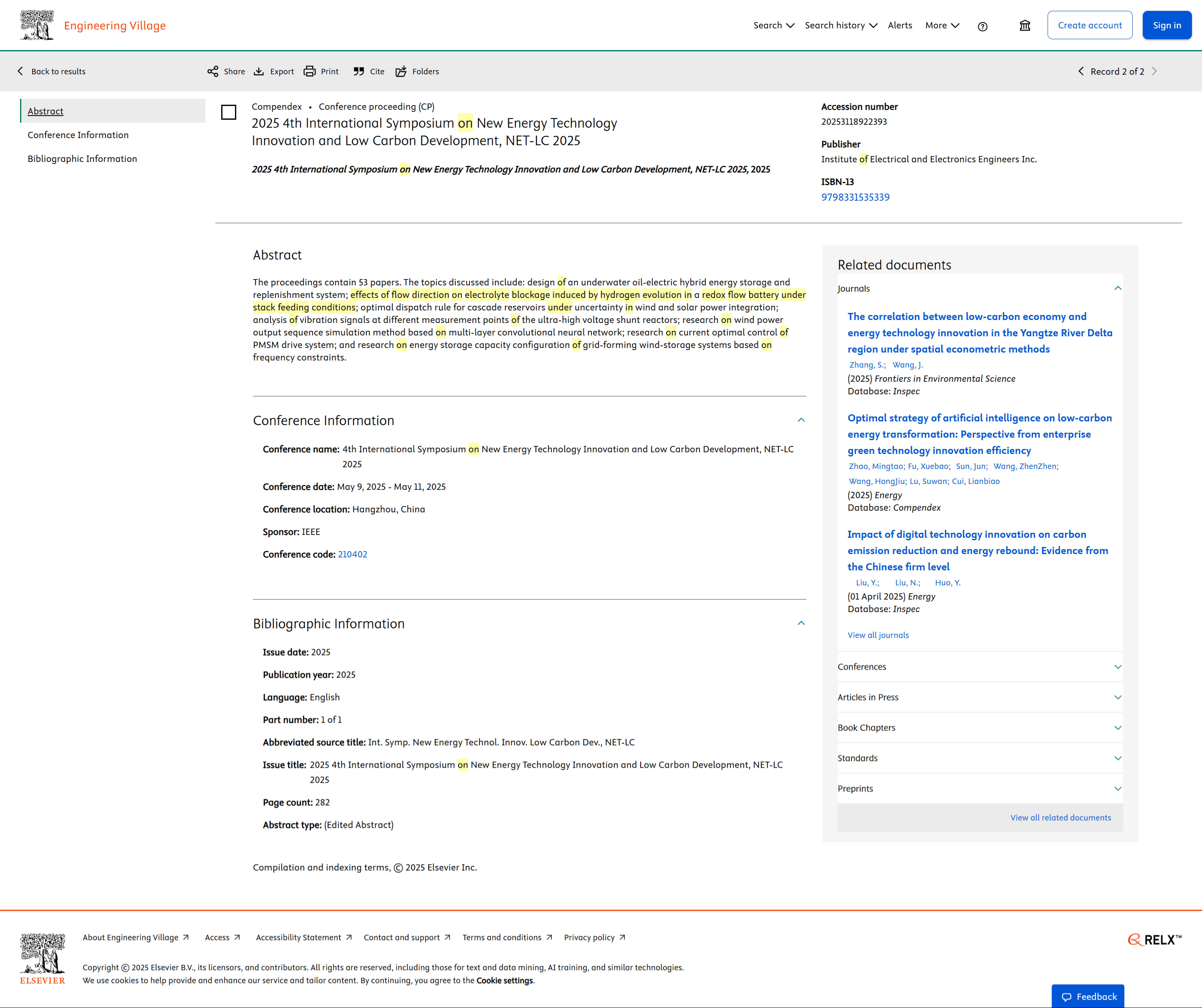
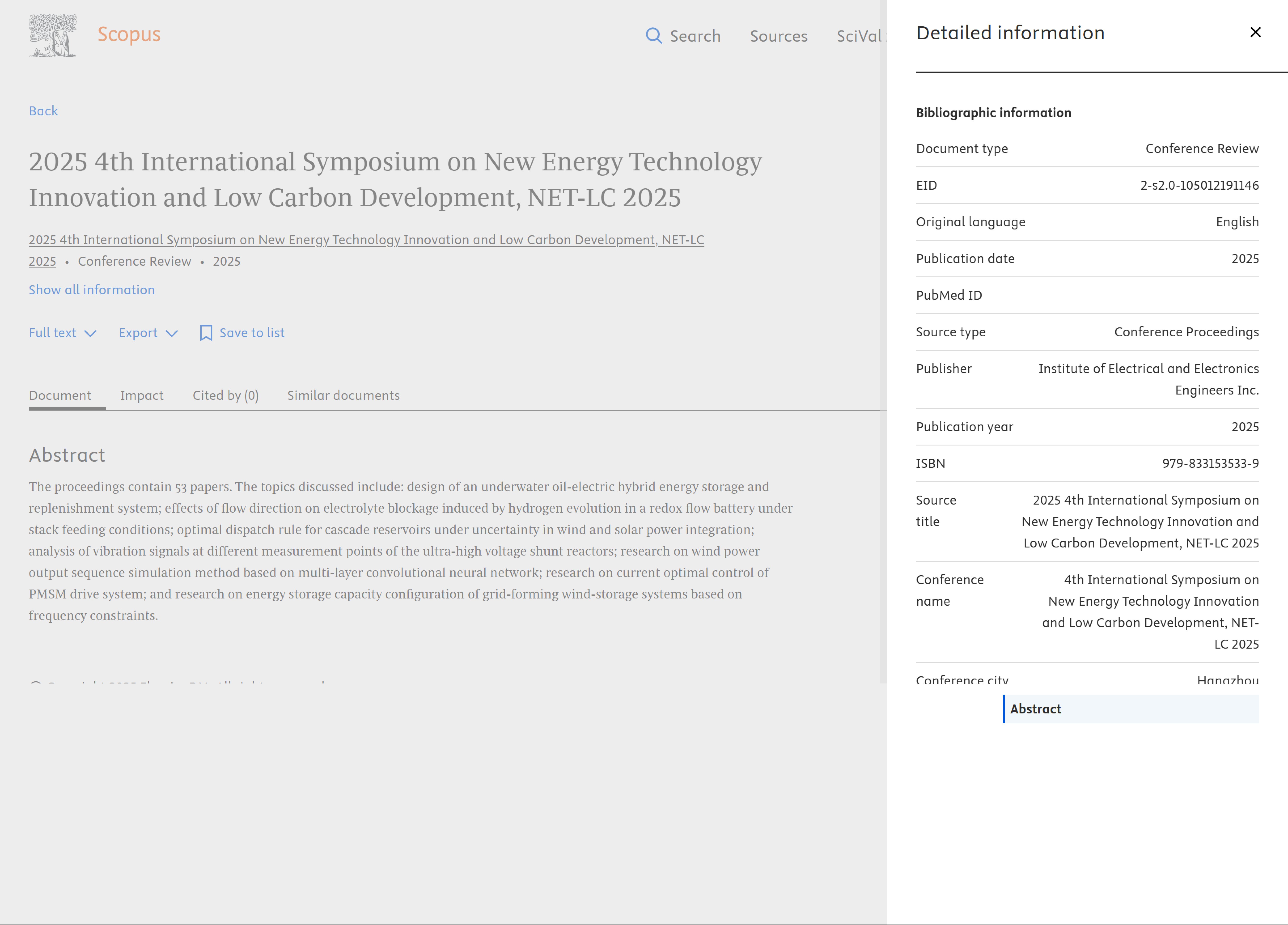
NET-LC 2025 | ||
📚︎Cover |
📚︎EI Compendex |
📚︎Scopus |
NET-LC 2024 | ||
📚︎Cover |
📚︎EI Compendex |
📚︎Scopus |



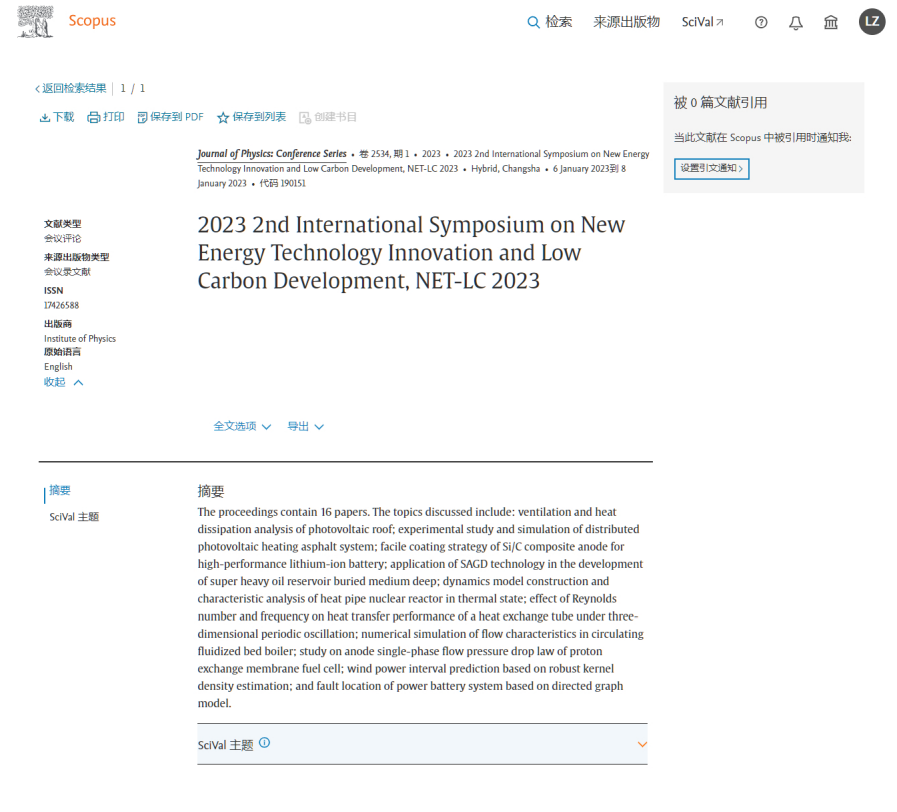
NET-LC 2023 | ||
📚︎Cover |
📚︎EI Compendex |
📚︎Scopus |


NET-LC 2022 | ||
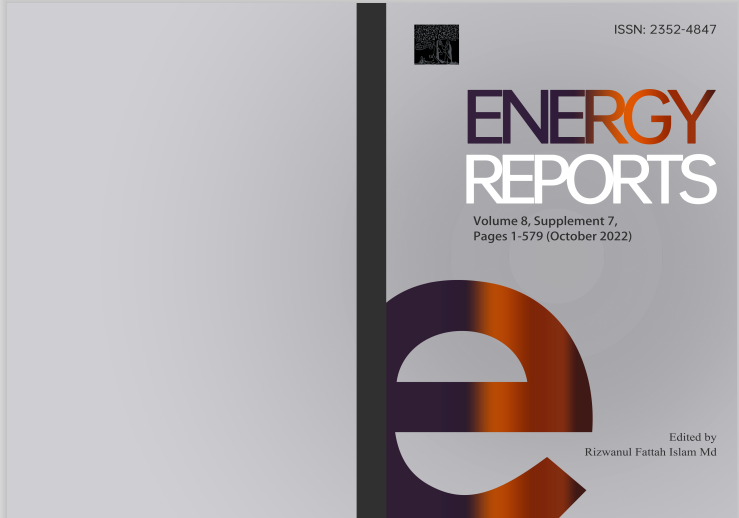
📚︎Cover |
📚︎EI Compendex |
📚︎Scopus |


Note: All submitted articles should report original research results, experimental or theoretical, not previously published or under consideration for publication elsewhere. Articles submitted to the conference should meet these criteria. We firmly believe that ethical conduct is the most essential virtue of academics. Hence, any act of plagiarism or other misconduct is totally unacceptable and cannot be tolerated.

Contact
Conference Secretary: May Chen
Tel: +86-13922150140 (Wechat)
E-Mail: icnetlc@163.com
If you have any questions or inquiries, please feel free to contact us.